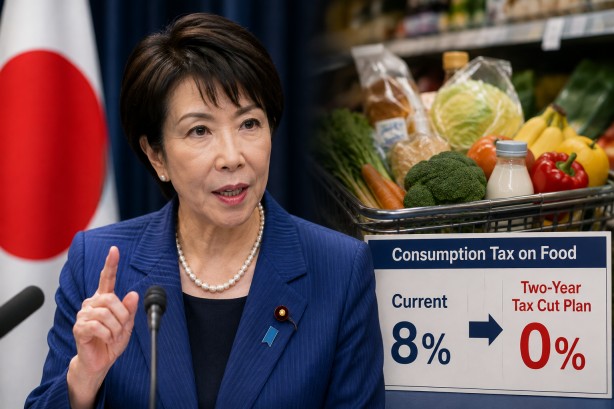
Japanese Prime Minister Sanae Takaichi has put forward a proposal that aims to temporarily reduce the consumption tax on food, effectively lowering it to zero for two years. The intention is to achieve Cabinet approval by next week, followed by parliamentary endorsement later this year. Under this plan, the current food tax rate of 8% would decrease to 1% starting from April 2027, with the remaining financial burden alleviated through benefits linked to income. Takaichi stated that this initiative is designed to relieve middle- and low-income households from cost-of-living pressures, with a commitment to reverting the tax cut after the two-year period.
The proposal is encountering resistance from within the ruling Liberal Democratic Party (LDP). Critics inside the party have raised concerns about the proposal’s estimated cost of ¥10 trillion ($62.25 billion) and the absence of a clear plan for funding it. Additionally, fiscal conservatives within the party have voiced skepticism about the feasibility of restoring the tax rate once the temporary reduction concludes.
While Takaichi’s plan intends to provide economic relief, it has sparked a heated debate over fiscal responsibility within the LDP. Party members skeptical of the proposal are questioning the long-term financial implications and the government’s ability to fund such a significant reduction without a specified revenue source. They argue that the plan could pose a risk to the country’s fiscal health if not managed carefully.
Despite the opposition, Takaichi remains committed to her proposal, emphasizing its potential to support households struggling with rising living costs. Her administration is focused on navigating the political landscape to secure the necessary approvals, while addressing the fiscal concerns raised by her party’s critics. The debate over the proposal highlights the balancing act between providing immediate economic relief and ensuring long-term fiscal sustainability.