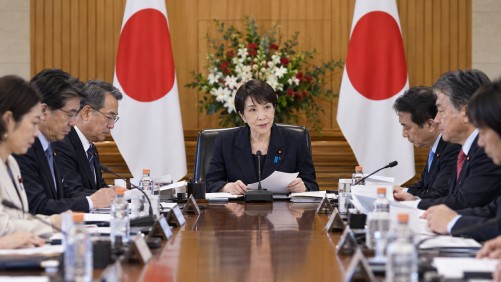
The latest Cabinet reshuffle by Japanese Prime Minister Sanae Takaichi is poised to influence the country’s political landscape by reducing the traditional sway of party factions in government appointments. This change could alter the dynamics within the ruling Liberal Democratic Party (LDP) and the legislative priorities tackled by the government.
On September 17, Takaichi announced the reshuffle after personally evaluating questionnaires from LDP lawmakers regarding their desired government roles. While many senior ministers retained their positions, some new appointments were made based on these individual submissions. Notably, Hiroshi Nakatsuka from the junior coalition partner Nippon Ishin was appointed as the party’s first Cabinet minister, signifying a move towards a more inclusive Cabinet composition.
Among those benefiting from this shift is Hisayuki Fujii, the new internal affairs minister, who confirmed that Takaichi had taken his policy priorities into account before appointing him. Goshi Hosono, now the reconstruction minister, has also been tasked with overseeing disaster management and the establishment of a Disaster Management Agency, demonstrating the government’s focus on enhancing disaster preparedness.
Despite the progress in reshuffling the Cabinet, controversy has arisen with the appointments of Kazuo Yana and Yoshihiro Seki as agriculture and education ministers, respectively. Both were previously implicated in a political funding scandal within the LDP, prompting opposition parties to demand further clarification on their past actions.
The restructured Cabinet will soon tackle legislative challenges, including a proposed temporary reduction in the consumption tax on food and deliberations over a bill that could alter the number of Lower House seats. As Takaichi’s selections reflect a departure from factional influences, the efficacy of these initiatives will likely test the reshuffle’s impact on Japanese governance.