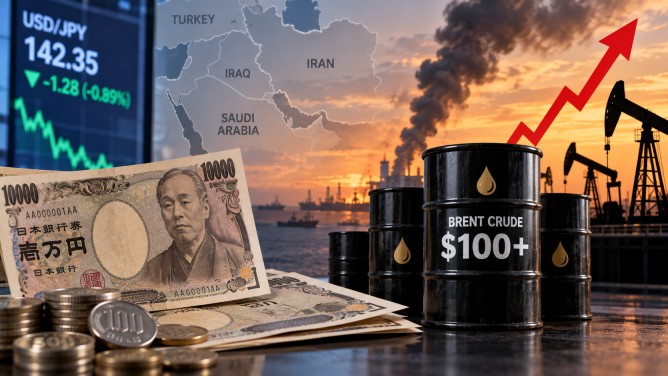
The Japanese yen experienced a notable surge, reaching a seven-month peak against the US dollar as of Wednesday. This rise comes amidst escalating tensions in the Middle East that have propelled oil prices beyond the $100 per barrel mark, stirring up fresh worries about inflation. Trading at approximately 153.32 per dollar, the yen hovers near Tuesday’s seven-month high of 152.89. This month’s approximately 4% gain in the yen is attributed to the anticipation of further interest-rate hikes by the Bank of Japan and the potential repatriation of overseas funds by Japanese investors.
Oil markets witnessed significant activity, with Brent crude futures rising as much as 2.3%, crossing the $100 per barrel threshold for the first time since late July. This increase is linked to heightened military tensions in the Middle East, involving Saudi Arabia, Iran, and US forces. The spike in oil prices is heightening concerns about renewed energy inflation, which could complicate monetary policy decisions for major central banks. Investors are closely monitoring the impending US inflation data set for release on Friday, as it may shape expectations for the Federal Reserve’s upcoming interest-rate decision.
In light of these developments, the Bank of Japan’s upcoming meeting on September 17-18 is drawing significant attention, with markets largely expecting a 25 basis point increase in the benchmark rate. The yen’s recent rally may gain further momentum if Governor Kazuo Ueda indicates a stronger stance on monetary tightening. Meanwhile, the US dollar saw a slight weakening, whereas the euro appreciated by 0.18% to $1.1641. The dollar index neared its lowest point in nearly two weeks.
Elsewhere, the Canadian dollar maintained its stability despite escalating trade tensions with the United States. In contrast, China’s yuan remained near a three-and-a-half-year high against the dollar, bolstered by robust economic data. As oil prices soar above $100 and key central-bank meetings loom on the horizon, currency markets are expected to remain highly sensitive to developments in the Middle East, inflation figures, and interest-rate forecasts.