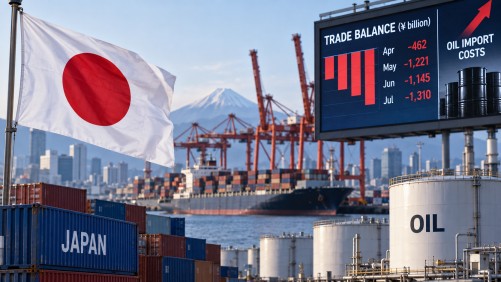
Japan’s economy faces heightened pressure as the nation grapples with a trade deficit of approximately 1.1 trillion yen ($7 billion) in August, marking the fourth consecutive month of such shortfalls. The persistent deficit underscores the strain on Japan’s financial stability, primarily driven by soaring energy import costs, which have been exacerbated by geopolitical tensions.
August’s trade figures reveal a 28% increase in imports year-on-year, totaling 11.15 trillion yen ($71.9 billion), as reported by Japan’s Finance Ministry. The surge is largely attributed to the escalating costs of crude oil, fueled by ongoing conflicts in the Middle East that have disrupted critical oil supplies and shipping routes, particularly around the Strait of Hormuz. This dependency on imported energy is proving costly for Japan, a nation heavily reliant on foreign energy sources.
Simultaneously, Japan’s export sector showed resilience with a 19.3% rise in exports, amounting to 10 trillion yen ($64.5 billion). This growth was predominantly driven by strong performances in the automotive and computer chip industries. Exports to the United States saw a significant increase of 24.9%, while imports from the US jumped 55.2%, highlighting a robust bilateral trade relationship.
Trade with Europe also exhibited growth, with exports increasing by 11% and imports rising by 20.4%. In contrast, Japan’s trade with the Middle East experienced a decline, with exports decreasing by 5.2% and imports falling by 4.2%, reflecting the reduced trade activity amid regional instability.
As Japan navigates these economic challenges, the impact of rising energy costs continues to loom large, stressing the importance of diversifying energy sources and stabilizing trade routes. The ongoing global tensions and their effect on Japan’s trade balance remain a critical area for economic policy focus.