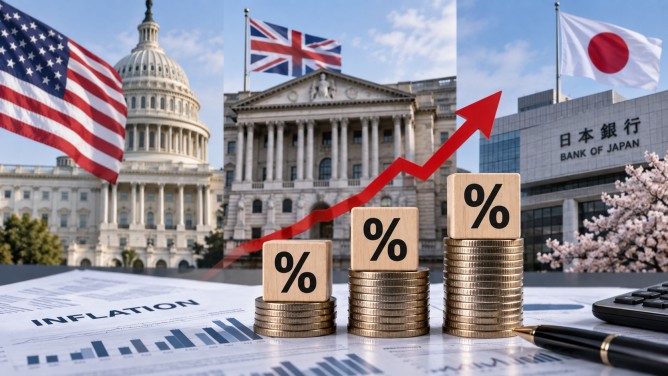
This week, central banks in the United States, United Kingdom, and Japan are preparing to announce their latest policy decisions, with interest rates coming back into sharp focus due to surging inflation and rising energy prices. The Federal Reserve is under particular scrutiny, as higher oil prices threaten to push U.S. inflation further above its 2% target. This increase in energy costs is partially driven by the conflict involving Iran and disruptions in the Strait of Hormuz.
U.S. inflation currently stands at 3.4% annually, significantly above the Federal Reserve’s target. Fed Chair Kevin Warsh has suggested that if inflation does not continue its downward trend toward the target, policymakers might need to take additional action. Despite President Donald Trump’s calls for lower interest rates, the Federal Reserve is expected to carefully consider the risks associated with inflation before making its next decision.
Across the Atlantic, the Bank of England is likely to maintain its interest rate at 3.75% when policymakers convene later this week. Nevertheless, stronger-than-anticipated economic growth and rising energy prices have fueled concerns that inflation could remain high. Some members of the Bank’s Monetary Policy Committee have already advocated for higher rates, raising the possibility of a more hawkish stance, even if rates stay unchanged for now.
In Japan, the Bank of Japan is preparing for a potentially impactful rate decision. The central bank is widely anticipated to raise its policy rate by 0.25 percentage points to 1.25%, a level not reached in over 30 years. This expected rate hike follows the yen’s strengthening, a result of measures taken by Japanese and U.S. authorities to support the currency.
Meanwhile, the European Central Bank has already increased interest rates, citing ongoing inflationary pressures, partly due to the Middle East conflict. With oil prices remaining high and global bond markets experiencing renewed volatility, investors are keenly watching this week’s central bank decisions for indications of how they intend to balance the risks of inflation against the need for economic growth.