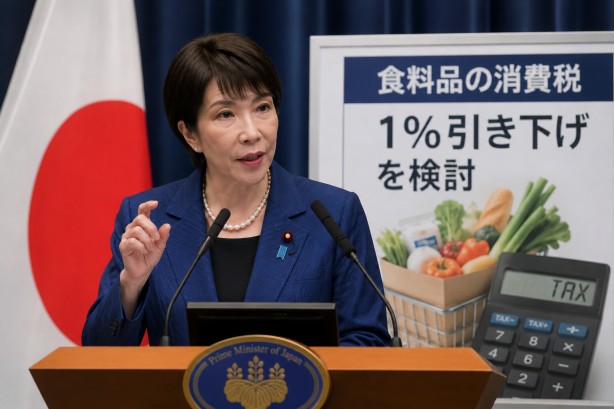
In a significant policy move, Japanese Prime Minister Sanae Takaichi is poised to direct the ruling Liberal Democratic Party to advance a plan aimed at significantly lowering the consumption tax on food items. The proposal seeks to reduce the tax from the current 8% to just 1% for a two-year period beginning in April 2027. This initiative emerges amidst stalled cross-party discussions on comprehensive tax reform.
The proposed tax cut aligns with the government’s broader agenda to provide relief to citizens struggling with the cost of living. To supplement the tax reduction, the government, along with the ruling coalition, is advocating for cash assistance targeted at low- and middle-income households. This initiative includes an estimated ¥600 billion in financial aid, designed to alleviate economic pressures on these groups.
Efforts to finalize the details of this policy are underway, with the government aiming to solidify the plan by early August. The intention is to prepare and introduce the necessary legislation during an extraordinary parliamentary session slated for later this year. This timeline is crucial to ensure the proposed measures are in place by the beginning of April next year.
The strategy reflects a concerted effort by the Japanese leadership to address economic challenges faced by many households, particularly in terms of everyday expenses. By reducing the consumption tax on food and providing direct financial support, the government hopes to ease the financial burden on its citizens, demonstrating a proactive approach to economic governance amidst ongoing discussions on tax reform.