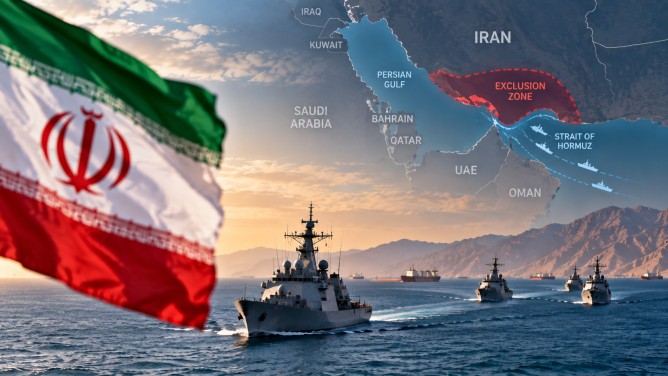
Iran has revealed plans to create a new “exclusion zone” near the Strait of Hormuz, a move aimed at vessels deemed to be attempting passage through this strategically vital corridor. Mohsen Rezaei, recently appointed head of Iran’s Supreme National Security Council, outlined that this zone would stretch from the site of the U.S. naval blockade towards the Strait of Hormuz and extend into the Arabian Gulf. Rezaei stated that any vessel identified as entering this new zone with the intention of traversing the strait could find itself on an Iranian sanctions list.
This announcement comes against a backdrop of escalating tensions, marked by a U.S. strike on three Iranian oil tankers in response to Iran’s ballistic missile launch at U.S. warships. Additionally, Iran claimed to have targeted an unmanned U.S. vessel attempting to enter the strait, a claim the U.S. military has dismissed. The Strait of Hormuz remains a crucial passage for global oil and gas supplies, and any disruption in this waterway raises significant concerns about potential impacts on energy prices and the broader global economy.
The United States has responded by deploying naval forces to enforce a blockade on Iranian ports, aiming to prevent Tehran from exporting oil. This military posture accompanies increased economic pressure following the breakdown of negotiations between the two nations. Despite these frictions, U.S. officials maintain that substantial volumes of oil continue flowing through the Strait of Hormuz, facilitated by naval security and alternative regional pipelines.
As tensions persist, Rezaei emphasized that Iran remains open to diplomacy but is seeking stronger assurances in any prospective agreements. The dialogue between Washington and Tehran has hit a stalemate, with both sides persistently accusing each other of violations. Nevertheless, the ongoing flow of oil through this critical maritime route underscores the continued strategic importance of the Strait of Hormuz amidst this geopolitical standoff.