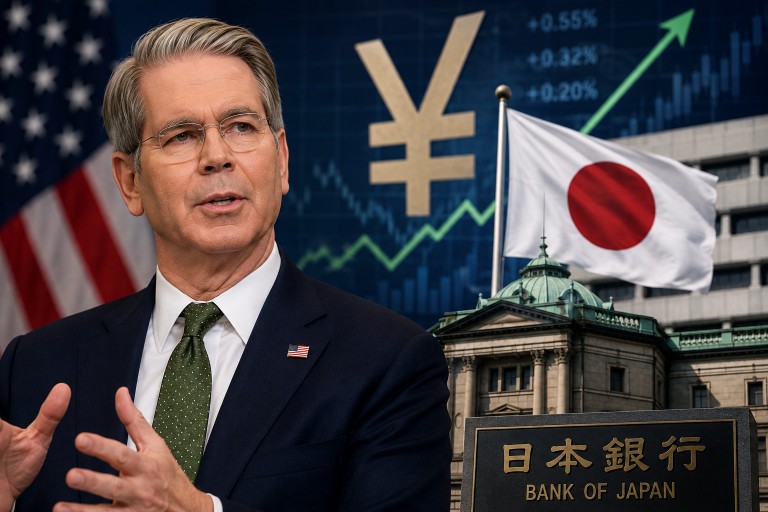
During a recent meeting at the G20 finance ministers and central bank governors’ summit in Asheville, North Carolina, U.S. Treasury Secretary Scott Bessent voiced robust support for Japan’s initiatives to bolster the yen. His remarks have strengthened market expectations that the Bank of Japan (BOJ) might raise interest rates during its upcoming policy meeting on September 17-18. Bessent, in his discussions with BOJ Governor Kazuo Ueda, emphasized that the yen’s current weakness is fueling inflationary pressures, underlining the necessity of sound monetary policy and transparent communication to manage inflation expectations and curb excessive currency volatility.
The prospect of another interest rate hike by the BOJ has gained traction among market participants, especially after the central bank’s previous rate increase in June. Should an increase occur in September, it could further solidify the belief that the BOJ is shifting towards a more aggressive monetary tightening strategy. This development comes as Japan’s interest rates continue to rise, with the benchmark 10-year government bond yield surpassing 3% for the first time since 1996. This shift reflects the anticipation of tighter monetary policy and growing concerns regarding Japan’s fiscal health.
As borrowing costs rise, the Japanese government faces a heightened debt-servicing burden. According to estimates from the Finance Ministry, if borrowing costs remain high, the interest payments on the national debt could escalate substantially in the coming years. These rising costs also extend to Japanese households, who are experiencing increased mortgage expenses, particularly those with fixed-rate loans. However, the higher interest rates offer some advantages, such as improved returns on deposits and long-term investments, benefiting savers and financial institutions.
The BOJ is tasked with a complex challenge: it must find a balance between supporting the yen and curbing inflation while minimizing the financial strain on households, businesses, and the government. As the central bank navigates these economic pressures, its policy decisions will play a pivotal role in shaping Japan’s financial landscape and influencing both domestic and international economic dynamics.