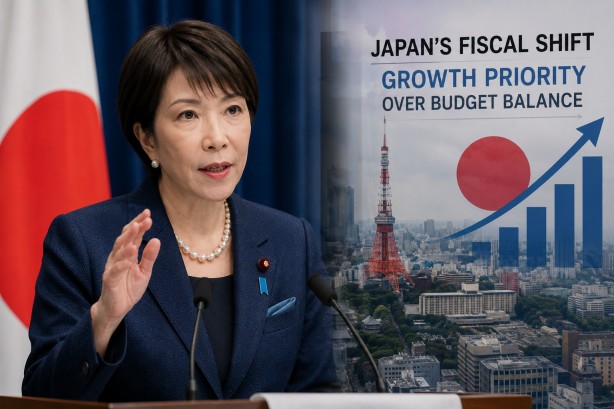
In a notable departure from its long-standing fiscal policies, Japan’s government, led by Prime Minister Sanae Takaichi, has approved a new economic strategy that shifts the focus from achieving a single-year primary budget surplus to fostering economic growth and ensuring long-term fiscal sustainability. This revised approach emphasizes the gradual reduction of the public debt-to-GDP ratio. To support this objective, the government plans an ambitious investment of over ¥370 trillion in both public and private sectors by 2040, targeting strategic fields such as artificial intelligence.
The policy also proposes temporary reductions in food consumption taxes and an increase in defense spending, sparking debates about the financing of these initiatives. Economists have voiced concerns, pointing out that the success of this strategy largely hinges on the maintenance of steady economic growth and low interest rates—variables that are inherently unpredictable.
As Japan pivots towards this new economic framework, financial markets are expected to keep a keen eye on the government’s forthcoming budgetary decisions. Observers are particularly interested in evaluating whether the bold spending plans can be harmonized with the pursuit of long-term fiscal stability.
This policy shift marks a significant transformation in Japan’s economic priorities, moving away from a strict focus on fiscal consolidation towards a broader strategy designed to sustain growth over the coming decades. The implications for Japan’s economic landscape are profound, as policymakers balance the immediate need for investment with the challenges of maintaining fiscal health in the long run.