Japan has expressed concerns that potential involvement by Germany in the Global Combat Air Programme (GCAP) could lead to delays in the development of its next-generation fighter jet. The program, a collaboration between Japan, Britain, and Italy, aims to create an advanced combat aircraft by 2035. However, Tokyo is worried that Germany’s participation might necessitate a reevaluation of current arrangements, possibly disrupting the project’s timeline.
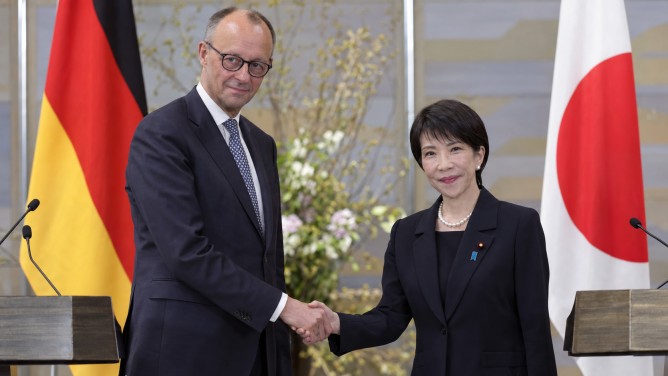
During a meeting in Tokyo on October 28, German Chancellor Friedrich Merz and Japanese Prime Minister Sanae Takaichi discussed the possibility of Germany joining the fighter jet development efforts. Chancellor Merz indicated that both nations would investigate if cooperation in this area would be feasible.
A Japanese Defence Ministry official noted that Germany’s involvement could require renegotiating the division of responsibilities already established among the three partner countries. This potential shift could complicate the project’s timeline, which Japan is keen to maintain.
Britain, on the other hand, appears open to Germany joining the initiative as it could help in sharing development costs and potentially lower the unit price through increased orders. Japan is planning consultations with Britain and Italy to explore the extent of Germany’s potential cooperation.
One scenario under consideration is allowing Germany to join as an observer. This would enable Germany to exchange information and consider purchasing the aircraft without directly impacting the current development schedule. The decision on Germany’s role in the project is yet to be finalized.