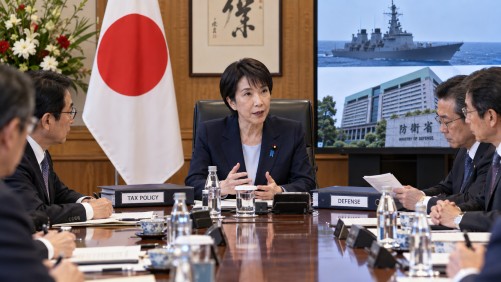
Japan’s newly reshuffled Cabinet is poised to tackle a series of significant challenges that have practical implications for the country’s economy, diplomatic relations, and national security. As Prime Minister Sanae Takaichi’s administration prepares to commence its work next month, efforts will focus on key legislation that could impact citizens’ daily lives, such as reducing the consumption tax on food items and introducing income-linked cash payments. These measures are expected to be addressed in an extraordinary Diet session anticipated in early October.
Given that the ruling coalition of the Liberal Democratic Party and Nippon Ishin lacks a majority in the Upper House, securing opposition support will be crucial to advancing these legislative priorities. Finance Minister Satsuki Katayama, who has retained her position, will lead the charge on the proposed consumption tax and financial assistance initiatives. Additionally, the government plans to push forward with a controversial proposal to reduce the number of Lower House seats, a reform primarily advocated by Nippon Ishin.
On the international front, Foreign Minister Toshimitsu Motegi and Defense Minister Shinjiro Koizumi will continue in their roles as Japan navigates complex relationships with China and the United States. The diplomatic landscape remains tense, particularly due to security issues related to Taiwan. Takaichi is expected to participate in the Asia-Pacific Economic Cooperation summit in Shenzhen, China, in November, signaling Japan’s commitment to engaging with regional partners despite ongoing tensions.
National security is another area of focus for Takaichi’s administration, with plans to revise Japan’s three core security documents by year-end, including the National Security Strategy. This revision aims to guide the nation’s foreign and defense policies in an evolving global environment. The debate over increased defense spending and its funding remains contentious, as the government seeks to bolster its defense capabilities without imposing additional financial burdens on the public.
Moreover, Takaichi has expressed a desire to advance constitutional reform, although concrete steps toward specific amendments have been limited. As these various initiatives unfold, the administration’s ability to navigate these domestic and international challenges will be closely watched, with significant implications for Japan’s future trajectory.