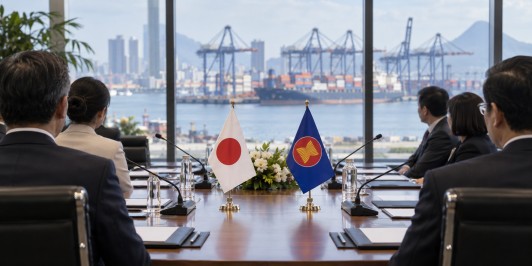
The prospect of enhanced economic ties between Japan and the Association of Southeast Asian Nations (ASEAN) could lead to stronger supply chain resilience and improved energy security in the region. This comes as both parties have agreed to explore the expansion of their existing economic partnership agreement, a development that was discussed during a meeting of economic ministers held in Manila on September 20.
Amid growing global risks and the increasing influence of artificial intelligence in economic activities, Japan and ASEAN are considering updates to their current agreement. The existing partnership, which dates back to 2008, has already been broadened to include areas such as trade in services and investment. The need for revision reflects a proactive approach to ensuring stability and growth in an unpredictable global landscape.
One of the central issues addressed in the discussions was energy security, particularly in light of disruptions to key supply routes in the Middle East. Japan has reaffirmed its commitment to support ASEAN countries in strengthening their oil stockpiles as part of efforts to secure energy supply chains. This initiative is seen as a critical step in mitigating potential energy supply disruptions and maintaining regional stability.
Beyond energy, both Japan and ASEAN emphasized the importance of closer economic cooperation in the face of geopolitical tensions and global trade uncertainties. The two regions have already established a robust trade relationship, with two-way merchandise trade reaching $245.4 billion in 2025 and Japanese investment in ASEAN totaling $9.5 billion.
As the world grapples with economic challenges, the collaborative approach between Japan and ASEAN signifies a strategic move to bolster economic resilience, leveraging technological advancements and reinforcing energy security to safeguard future prosperity.