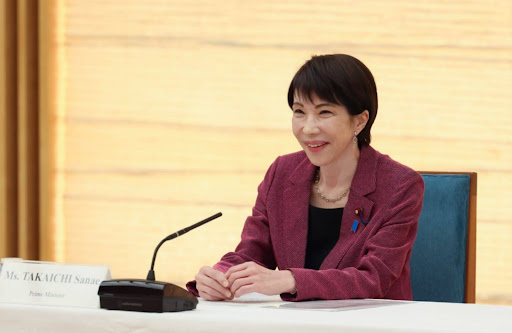
Prime Minister Sanae Takaichi is managing simultaneous pressure from a domestic energy emergency and external demands from Washington, announcing Japan’s biggest-ever oil reserve release — approximately 80 million barrels to refiners from Thursday — while declining US President Trump’s call for Japanese naval involvement in the Strait of Hormuz. The US-Israel conflict with Iran has disrupted oil tanker traffic through the Strait, threatening Japan’s supply of crude oil that it imports overwhelmingly from the Middle East. Takaichi’s dual challenge of protecting the economy at home while navigating complex alliance relationships abroad is defining her premiership.
At their Washington summit, Takaichi explained to Trump that Japan’s postwar constitution prevents the deployment of maritime self-defense forces to overseas theaters. She was firm but respectful in her refusal, having earlier in the crisis resisted calls from Trump to send Japanese naval assets to the region. Japan’s constitutional pacifism remains a bedrock of its foreign policy, enjoying broad public support and carrying significant international weight.
The domestic energy response has been executed with speed and scale. The 80 million barrel reserve release — covering 45 days of national consumption, 1.8 times the previous record — is backed by Japan’s total reserves of approximately 470 million barrels, equivalent to 254 days of demand. Energy officials say the release is sized to provide meaningful supply security while preserving Japan’s longer-term reserve buffer.
Gasoline subsidies have been introduced to cap prices at approximately ¥170 per litre, following a surge to record highs of ¥190.8. These are reviewed weekly to ensure continued relevance as market conditions evolve. The government has also been managing public communication to prevent the kind of panic buying that occurred during previous energy crises.
Takaichi has pledged that Japan will continue to pursue all available diplomatic efforts in coordination with allied nations to promote peace and stability in the Middle East. She has described the region’s stability as vital for Japan and for the international community as a whole. Japan’s measured, principled response to this crisis — reserves deployed, diplomacy activated, constitution honored — may prove to be its most significant test of national character in the post-Fukushima era.