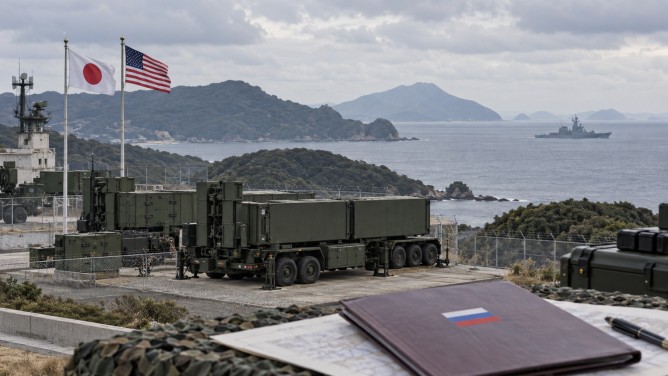
The deployment of US-made Typhon medium-range missile systems on Japan’s Kyushu island has sparked significant security concerns for Russia, potentially escalating regional tensions. This move, viewed by Moscow as a threat to stability, has led to a formal protest from Russia, urging Japan to reconsider the presence of these missile systems on its southern island.
In response to the deployment, Russia’s Foreign Ministry sent a protest note to Japan earlier this month, expressing concerns that the missile systems could undermine peace in the region. Russia has called on Tokyo to remove the systems and has emphasized the need for Japan to take these concerns seriously. This diplomatic exchange underscores the fragile nature of Russia-Japan relations, which are already strained by historical disputes.
The protest was further articulated by Russian Deputy Foreign Minister Andrei Rudenko during a meeting with Japanese Ambassador Akira Muto in Moscow. This high-level discussion reflects the seriousness with which Russia views the missile deployment, framing it as a pivotal issue in the broader context of regional security dynamics.
The tension between Russia and Japan is compounded by their longstanding disagreement over the southern Kuril Islands. Controlled by Russia but claimed by Japan, this territorial dispute has been a persistent obstacle in formalizing a peace treaty between the two nations since the end of World War II. Russia remains firm in its assertion of sovereignty over these islands, a stance that continues to be a point of contention with Japan.
As the situation develops, the deployment of missile systems on Kyushu may further complicate diplomatic efforts aimed at resolving historical disputes and enhancing regional cooperation. The impact of these military installations on the geopolitical landscape remains to be seen, but it is clear that both nations have much at stake in maintaining regional stability.